
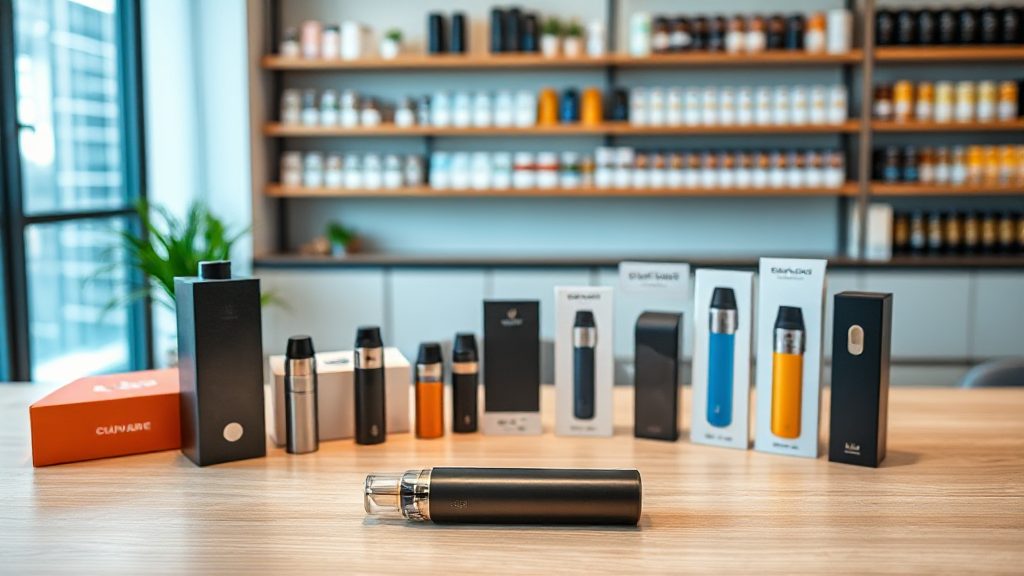
Small Ordering Habits That Make Same-Day Vape Delivery Work
Two people place their first orders on the same afternoon. One gets a confirmation within minutes, a courier window that actually holds, and a parcel that arrives before dinner. The other spends the next two hours refreshing a chat window, guessing whether the address was saved correctly, and wondering if the order even went through. Same city, same product category, same delivery promise. The difference was not luck, and it was not a better phone. It was habits — a handful of small, repeatable moves that turn Sg vape shop delivery from a gamble into a routine.
If you have ordered once or twice and something felt slightly off — a delayed handoff, a vague confirmation, a moment of doubt about what you actually bought — you are in exactly the right place. This is not a product review and it is not a list of tricks. It is a habit-by-habit walkthrough, from the ten minutes before you order to the five minutes after the parcel lands in your hand. Each habit comes with a short reason it matters and a practice cue you can run the next time you order. None of them require special knowledge. All of them compound.
Habit one: prepare your delivery profile before you are in a hurry
The most common cause of a messy first order is not a bad shop. It is a rushed checkout. When you are already out of supplies and typing with one thumb, small errors become expensive: a missing unit number, a postal code typed from memory, a phone number you no longer use. The shop then has to guess, and guessing is where same-day timelines quietly die.
The habit is simple. Before you ever need to order, spend five minutes building a clean delivery profile. Save your full address with unit number, a phone number you actually answer, and a preferred delivery window if the shop allows one. If you live in a building with a lobby, gate, or security desk, decide in advance whether the courier should meet you downstairs or come up. Write that decision down once so you never have to think about it again.
Why it matters: a courier who does not have to call you for clarification saves ten to twenty minutes, and in a same-day system those minutes decide whether you are in the first dispatch wave or the second. Practice cue: open your notes app right now and type your delivery block exactly as it should appear on a parcel. Copy-paste it next time instead of typing it fresh.
Habit two: check local stock signals before you build a cart
Newer buyers tend to browse the way they browse a streaming service — clicking whatever looks interesting — and then feel disappointed when an item is unavailable. Experienced buyers do the opposite. They scan for local stock signals first, then build a cart around what is actually ready to move.
Local stock is the quiet engine behind fast delivery. A shop that holds inventory in Singapore can pack and dispatch the same day, while a shop that dropships from overseas cannot, no matter how good its website looks. When you see a product page that clearly indicates ready local supply, you are not just buying a device; you are buying a shorter chain of handoffs between you and the parcel.
The habit: before you add anything to a cart, spend sixty seconds checking which items are marked as locally available. Build your order around those. If the exact flavour or model you wanted is not in local stock, decide whether you want to wait or substitute, rather than discovering the problem at checkout.
Why it matters: orders built on confirmed local stock almost never trigger the awkward “sorry, this is out of stock” message that resets your whole delivery timeline. Practice cue: treat the stock indicator the way you treat a restaurant’s open sign — check it before you commit, not after.
Habit three: order earlier in the day than feels necessary
Same-day delivery is a promise with a clock attached. Every courier network has a practical cutoff — a point after which your order slides into tomorrow, even if the website still accepts it. Newer buyers often order at 9 p.m., assume “same day” means “within a few hours,” and then feel let down by a morning arrival.
The habit is to order earlier than you think you need to. If you know you will want something by evening, place the order in the late morning or early afternoon. This gives the shop time to pick, pack, and hand off to a courier without racing the end of the day.
Why it matters: early orders get the widest choice of courier slots and the calmest handling. Late orders get whatever is left. Practice cue: pick a personal cutoff — say, 2 p.m. — and treat it as the line between “today” and “probably tomorrow.” If you cross it, adjust your expectation instead of blaming the shop.
Habit four: read the confirmation like a checklist, not a receipt
Most people glance at a confirmation message, see the word “confirmed,” and close the tab. That is a missed opportunity. A confirmation is the single best moment to catch a problem, because it is the last point before physical packing begins.
The habit: read the confirmation against four items — address, phone number, product and quantity, and the expected delivery window. If anything looks wrong, message the shop immediately, before the parcel is sealed. This is also the moment to confirm what you are actually receiving, especially with disposable devices where model names and puff counts can look similar at a glance. Singapore lana vape
Why it matters: a two-minute correction now saves a redelivery later. Once a parcel is packed and handed to a courier, changes become slow, expensive, or impossible. Practice cue: save your confirmations in one folder or chat thread so you always have a record of what you ordered and when.
This is also where a well-run retailer earns trust. When a shop like Singapore vape delivery sends a clear, itemised confirmation with a realistic window, you can verify everything at a glance instead of chasing answers. That clarity is not a luxury — it is the difference between a smooth order and a stressful one.
Habit five: keep the handoff window realistic and reachable
The courier handoff is where most first-time orders wobble. You step into a shower, miss a call, and the rider moves on to the next stop. Now your parcel is circulating and you are stuck waiting for a second attempt.
The habit is to treat the delivery window as an appointment. Keep your phone nearby and audible. If you must step out, tell the shop or courier in advance so they can adjust. If your building has a concierge or a safe drop point, confirm in advance whether the courier is allowed to use it.
Why it matters: a successful first attempt is almost always faster than a second one. Couriers route by efficiency, and a missed stop pushes you to the back of the queue. Practice cue: set a phone reminder ten minutes before your window opens so you are ready rather than surprised.
Discreet packaging is another part of this habit that is worth understanding. A shop that ships in plain, unbranded packaging removes a small social friction — neighbours, family, or building staff do not need to know what is in the box. If discretion matters to you, confirm it before ordering rather than assuming it.
Habit six: verify the product the moment it arrives
The order is not finished when the parcel lands. It is finished when you have checked what is inside. Newer buyers often open the box, use the device, and only later notice that the flavour, model, or quantity was not what they expected — by which point the trail is cold.
The habit: open the parcel within the first few minutes and check three things. First, the model and flavour match your confirmation. Second, the packaging is sealed and intact. Third, the device or pods look and feel as expected, with no signs of damage in transit.
Why it matters: problems reported within minutes are easy to resolve. Problems reported days later are disputes. Practice cue: keep the outer packaging until you have finished your check, then dispose of it — that way you always have the reference in front of you.
This is also where buying authentic stock pays off. A retailer that sources genuine devices and pods can stand behind what it ships, so a quick verification is all you need. If you are still building your list of trusted shops, a service like Vape delivery sg that emphasises authentic devices and local stock gives you a stable baseline to compare against.
Habit seven: keep a simple reorder rhythm so you never scramble
The final habit is the one that prevents the panic order in the first place. Most chaotic deliveries are not caused by bad shops — they are caused by running out at the worst possible moment and ordering in a rush.
The habit: track roughly how long your device or pods last, and set a reorder point a few days before you expect to run dry. If a device lasts you a week, order on day five. If it lasts a month, order in the final week. This turns delivery from an emergency into a scheduled errand.
Why it matters: planned orders are calm orders. You have time to check stock, choose a sensible window, and avoid the late-night scramble that leads to mistakes. Practice cue: put a recurring reminder in your phone labelled with your reorder day, and treat it the way you treat a subscription renewal.
Once this rhythm is in place, the whole process becomes boring in the best way. You know which shop has local stock, you know your delivery block is saved correctly, you know your window, and you know what to check when the parcel arrives. That is what experienced buyers actually have that beginners do not — not secret knowledge, just habits repeated until they are automatic.
If you want to put these habits into practice with a retailer built around same-day local supply, start with a shop that makes the process transparent. A service like Lana vape same day delivery gives you a clear order flow, itemised confirmations, and discreet packaging — the three things every habit above depends on. And if you are still comparing options, it helps to know that lana vape sg focuses on ready local stock and authentic devices, so you can build your routine on a stable foundation rather than a lucky one.
None of these habits is dramatic. Saving your address takes five minutes. Checking stock takes one. Ordering before 2 p.m. costs you nothing. Reading a confirmation is something you already do. But stacked together, they are the entire difference between the smooth first order and the chaotic one. Start with the habit that failed you last time, run it once, and notice how much of the stress disappears. Then add the next one. That is how ordering stops being a gamble and starts being a skill.


Leave a Reply